Curiocity
Cited answers. Nothing leaves your machine.
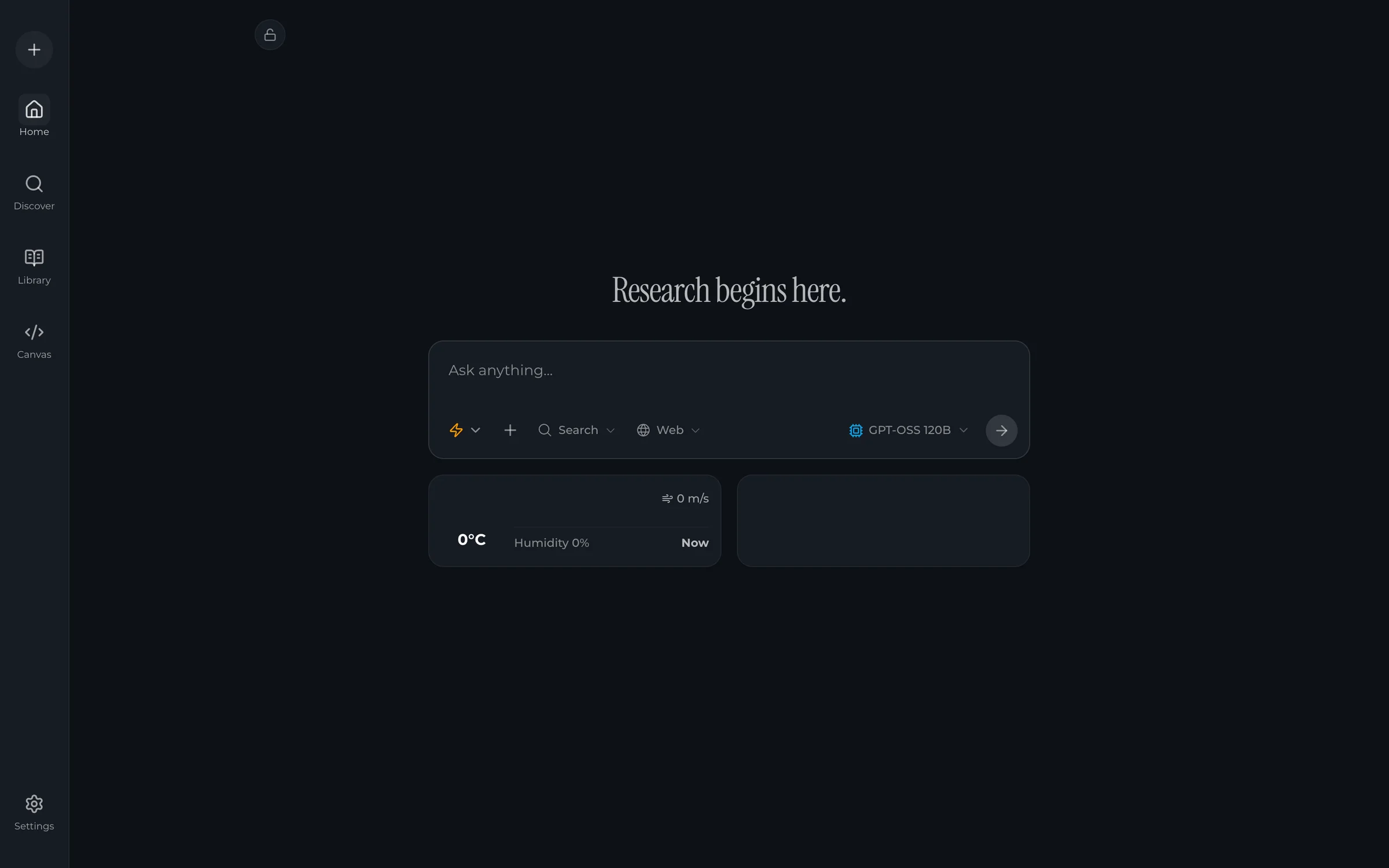
- Sole engineer
- 2026
- Next.js · TypeScript · Electron · SQLite · SearXNG · Pyodide
- search engines per query
- 7search engines per query
- unit tests
- 124unit tests
- end-to-end suites
- 6end-to-end suites
The problem
Search engines return links, not answers. Chatbots return answers without evidence. Both send every question to someone else's server.
The approach
Search first, then answer. Every factual question goes through a local SearXNG metasearch across seven engines. The model reads the pages and writes an answer in which every claim carries a numbered citation. It is never allowed to answer facts from memory.
- Deep research. A capped, multi-round loop that reads pages and writes a sectioned report.
- Model council. Up to three models from different vendors answer from the same sources. A chair model compares them and calls out where they disagree.
- Your models. Local Ollama for free, an existing AI subscription, or your own API keys.
- Code canvas. JavaScript and Python run inside the app, sealed off from your files and network. That matters, because the same app holds your API keys.
One Next.js codebase ships twice. An Electron desktop app that starts its own server on 127.0.0.1, its own search engine and a local SQLite file. And a hosted demo, which says plainly that it is not the private one.
What I owned
Product and engineering, built on the open-source Vane engine. The desktop shell, local search provisioning, storage, the canvas and its sandbox, the test suites, and the release pipeline for macOS and Windows.
Outcome
macOS builds signed and notarized by Apple. Windows in beta, built and install-tested on CI. 124 unit tests and six end-to-end suites.